Still a couple fiddly layout bits to fix with my manuscript, and then it will be ready to publish! I’m so stoked! Publishing THE PONO WAY was the one thing I actually wanted to accomplish this year.
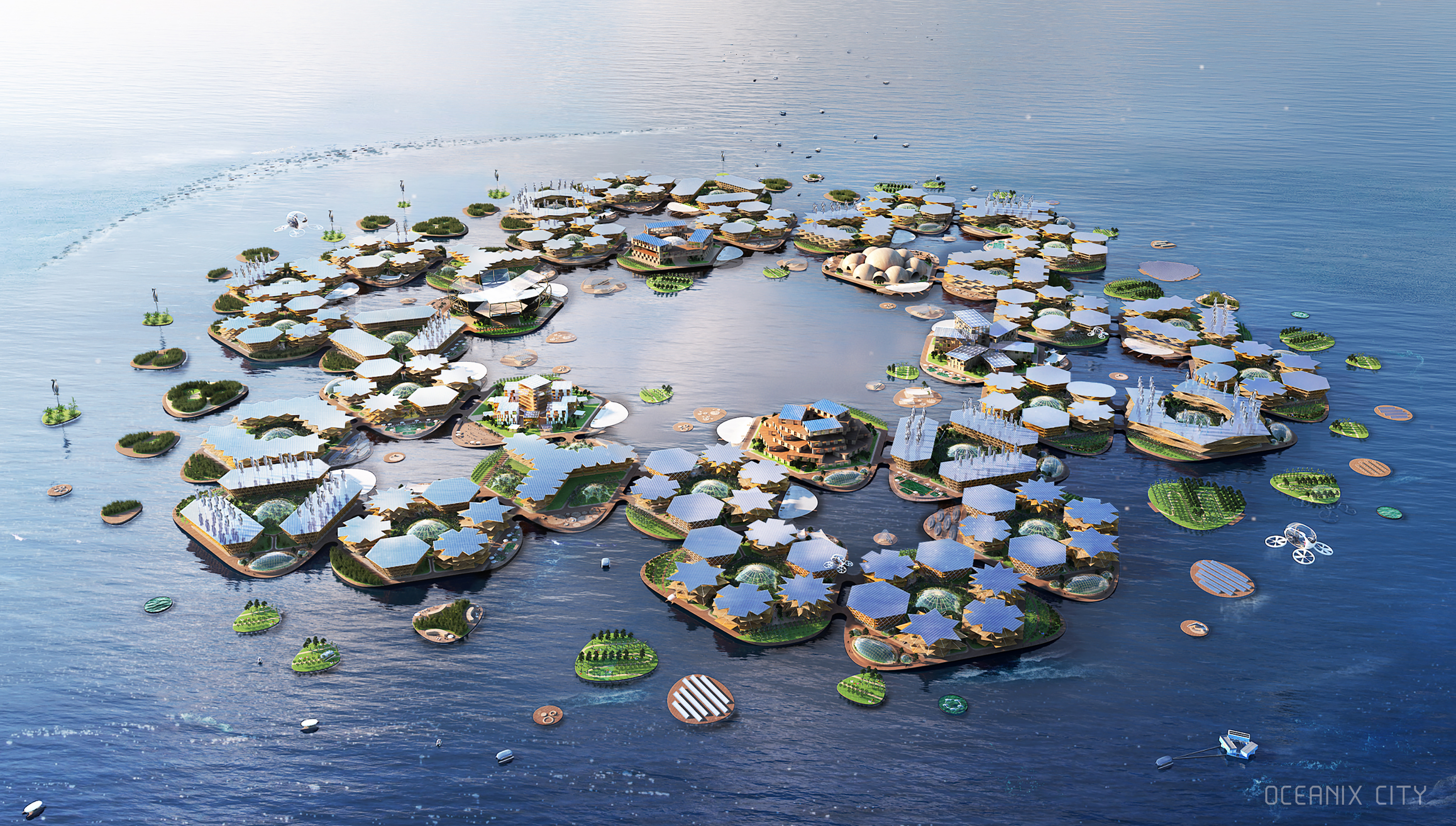
Credit: OCEANIX/BIG-Bjarke Ingels Group
This picture is much what I imagine my island-state, Pono, to look like, although this is a coastal city and my Pono is in the deep ocean. This is an architectural concept of a floating city called Oceanix. It’s synchronistic how it popped up in the news as I was drafting my novel.
Tomorrow I will share the cover reveal! Meanwhile, here is the blurb for Amazon. What do you think?
A refugee crisis tests a utopian island community to its limits.
In 2050, the United States of America finally crumbled. Jake Weintraub’s family fled the burned-out ruins of Chicago for the safety of the artificial island steading of Pono. Now grown, Jake works as an independent journalist, but the horrors of the Chicago River Riots still haunt him.
As Pono watches, safe in the Pacific Ocean, the successor West Coast state of Cascadia collapses under a further series of catastrophes. Thousands of desperate refugees arrive on Pono’s shores – homeless, stateless, and hungry.
Jake throws himself into covering their story, even as their plight evokes memories of his own trauma and flight. Can Pono, a carefully constructed island society, accept this influx of strangers? Or will this crisis tear Ponoan society apart?
THE PONO WAY is a solarpunk science fiction novel in the vein of Kim Stanley Robinson’s THREE CALIFORNIAS or THE FIFTH SACRED THING by Starhawk. Find out what happens by buying your copy today!
My new book, The Pono Way, is coming along well. I am preparing the manuscript for publication. It should come in the next couple weeks. It does take a while.
The book is subtitled, A Solarpunk Novel (mostly for the Amazon algorithm.). So what does that mean? What is solarpunk?
Solarpunk is an emerging subgenre of science fiction. You can think of it a a 21st-century evolution of cyberpunk, except hopeful and positive instead of depressive and dystopian. That’s on purpose. Solarpunk focuses on near-future, Earth-based sci-fi, about ways the human race comes to grip with climate change and learns how to work together to live sustainably on this Earth. It is a variety of “cli-fi,” or climate fiction: narratives about confronting, or falling to, the challenge of global climate change. Solarpunk is notable because it insists on presenting workable solutions to the manifold problems the human race faces as the world heats up. It is intended to inspire optimism and give people hope for the future.
If you’re like me, a lifelong fan, you probably love The Expanse, the book and TV series. Imagine solarpunk as between here and there. Humanity struggling to fix its mistakes. In The Expanse, history tells that we didn’t do a very good job. Solarpunk represents a time and place when all is not yet lost.
I was inspired to write this by an essay by the noted SF author David Brin on IO9.com, stating that it was time for sci-fi to be optimistic again, to give people hope and a vision for the future.And then a close friend of mine said the exact same thing to me just a couple days later, “I’m tired of dystopia. Where’s the hope?” That’s what I’ve tried to do in The Pono Way. It’s hard won, but I do think it shines a ray of hope.
Solarpunk’s aesthetic is both multicultural and nature-based, inspired by Art Nouveau and indigenous cultures around the world. It politics is generally communitarian and anti-capitalist. Here is a cool summation from the clever entry at TV Tropes:
Solar punk works look toward a brighter future (“solar”) while deliberately subverting the systems that keep that brighter future from happening (“punk”).
People quibble about how “punk” — anti-authoritarian and subversive — solarpunk really is..”Punk” is often just used as a tag for a subgenre of science fiction these days, the way “-gate “indicates a political scandal. I guess that’s up to the individual authors. I happen to think The Pono Wayis pretty subversive. Growing up in the Watergate era, it was my childhood ambition to get on a government “enemies” list. Because I had heard about Nixon’s “enemies” list (he was famously paranoid), and I figured if you were an enemy of Richard Nixon, you were on the side of right.
That was back when people could still have some privacy, long before the Internet, before total information awareness. I wouldn’t be so sanguine now.
The Pono Way is also informed by my experience as a Hurricane Katrina survivor. I think about things like climate disaster and mitigation A LOT. About failures of government, and how they can be fixed or avoided. And it comes out in my fiction, whether I intend it to or not.
This is getting kind of long, so I will cut it short, and shoot some links in the next post so you can learn more. . In the meantime, Aloha. (Pono’s culture has many Polynesian influences, it being a Pacific island-state.). Thanks for reading!



 Atlantis Fallen