The Pono Way is Horribly Relevant Once Again

I wrote my second novel, The Pono Way, during Donald Trump’s first administration.  Published it toward the end.  I was pleased to see that even those who didn’t really enjoy the book, still got the message: be welcoming to immigrants.  They need help, not condemnation.

The book got some good reviews and was a semi-finalist in an indie sci-fi contest, so I was pleased with it overall.   I’m glad the book arrived in time to be relevant, but I was relieved that its message, speaking out against MAGA’s particular blind anti-immigrant furor, was no longer so necessary.  

But here it is again.  FOTUS is back, and masked thugs are snatching people off the streets without warrants, badges, or accountability.  Brown people.  Foreign people.  People going to their immigration meetings.  And the occasional natural-born American citizen caught up in the sweeps.  Oops.  Trump’s brownshirts.  Hard to believe.  Hard to accept.  

So The Pono Way is relevant once again: follow the message of Leviticus to welcome the stranger among you as your own, for you were once strangers in the land of Egypt.  And the ethos of the United States: give me your tired, your poor… I lift my lamp beside the golden door.

This means a great deal to me.  My mother was an immigrant.  I’m a second-generation American.  I can feel it, the xenophobia.  It’s personal to me.  It’s not abstract.  I hate it!  America is built from the grit of generations of people like my mom, who took a powder on their whole entire lives, and went to live a new one in the New World.   And the people who survived being snatched from everything they’d ever known, the destruction of their ways of life. . To deny that is morally insidious.  

So, I kind of hate that the book is newly relevant again, but I’m also glad it out’s there, doing its job, a tale to point people to.  It has a happy ending! I like to write positive sci-fi. 

Also it’s short.  A short novel but I put a lot into it. It’s short, it’s on Kindle Unlimited, and it has a happy ending.  We all could use one.  So check it out!  
Art as Resistance: Writing in Troubling Times

I’m doing good work on Majestic Seventeen, my current project. Creeping forward 500 words at a time. “The End” has assumed the nature of the horizon: an abstract concept that recedes before you, never attained. It’s a big book!

But I write because I don’t know what else to do.

When the World Feels Like It’s Burning

It’s hard to articulate even to ourselves how bananas and terrible everything is right now. Oligarchs crashing the entire world economy to enrich themselves further. Law-abiding people being detained and disappeared. A dipshit narcissist tech nerd chainsawing the federal government for no good reason as far as I can see. Meaning and reality themselves totter under the weight of lies and conspiracy theories. And that doesn’t even touch on the endemic problems that fester in the background — climate change, inequality. The wheels are just coming off our civilization.

This is why I write speculative fiction. To try to imagine something different, something better. Hope arising in the ruins, from lost Atlantis, from America. I have personal experience with that, rising from ruins. Hurricane Katrina. This year is the twentieth anniversary. It always shows up in my work and it will show up in a big way this year.

I watched this ruination for a while. My entire career. Public librarianship gives you a raw faceful every day of the structural injustice and endemic heartlessness of our society. You work with people who have been failed by society in every possible way. Deliberately, methodically. Then kicked when they’re down. The “digital divide” just exacerbated that over the last thirty years. Requiring computer literacy and expensive technology from people who were functionally illiterate, the first of the many ways society failed them. Having to go online to apply for a job at Walmart. It isn’t right. The public library has been the finger in the dike of that flood of injustice all along.

The year of the pandemic, I had a health crisis of my own, and when early retirement was offered as a cost saving measure for city government, I took it. So I could turn my attention to writing. Before I died.

Art Is Not a Luxury. It’s a Spell.

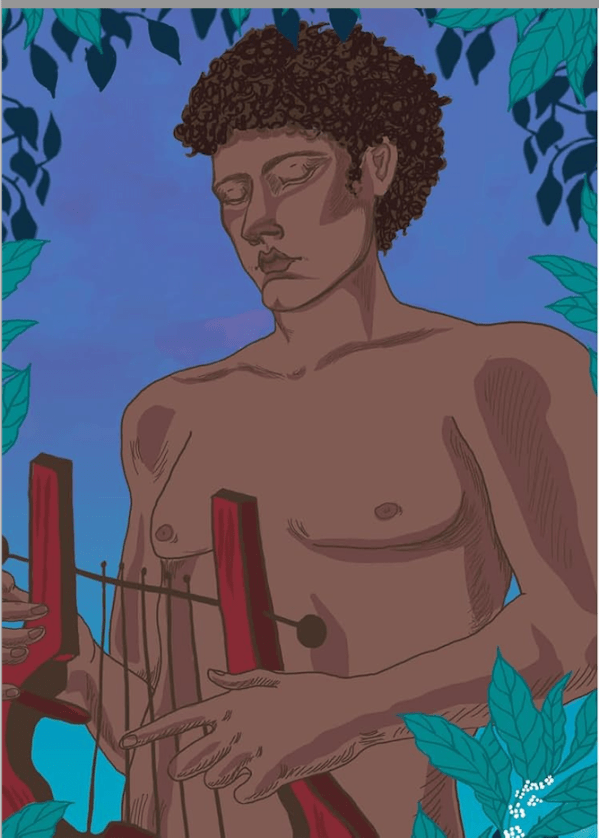
I pulled an Oracle card today, from the World Shamans Oracle, and the card was Orpheus. The tragic, mad poet-sage who could move the stones to weep with his song. Appropriate since I was going to work on this very blog post. The guidebook says, “Poetry is a form of shamanism that takes place in language; each word acquires value in the verses and has the power to re-enchant the world.”


That’s what I’m trying to do, why my writing feels as much a spiritual practice to me as creativity. Re-enchant the world. Western culture is absolutely desperate to re-enchant the world. I state that in my Artist’s Statement: I write “pulpy, entertaining speculative fiction that also advocates progressive values, and interrogates structures of power and belief. My goal is to entertain people by telling tales of other worlds, which help them think how we could manifest a better world here and now. ”

In times like these, art is not just entertainment or a luxury. Not an escape. It is resistance. It is survival. Do you remember how desperately we clung to art through the Covid pandemic lockdown? It was the only thing that got us through. Shows, comedy, music. Even baking bread like it was a blessed sacrament. That is what I learned from the pandemic: art is non-negotiable.

Art is life.

The Power of Naming

If shamans are healers, I’m not a healer of bodies, but of meaning. Telling stories that help bind up the wounds of civilization. The Pono Way is about solarpunk, DIY resistance to imperialism and the dangers of xenophobia. Even people who don’t like the book get the message. Daughter of Atlas is about the collapse of imperialism and the danger of ecological destruction. Majestic Seventeen is turning out to be about facing down systems of power, control, and belief. Yes, they’re all adventure speculative fiction, but I hope they’re more than just that.

My Lane is the Highway

I reference this more in my post My Lane is the Highway. I don’t need to write to put food on the table. I can let my ideas expand, experiment with different forms, different shades in the prism of speculative fiction. I write to entertain people but also make them think. Before anything new arises in the world, someone has to imagine it. I can do that.

The world we have now didn’t arise from natural selection or the invisible hand of the market. It was deliberately made, and it is working as intended. Extracting wealth and blood from the masses to gorge the billionaires. It can be unmade. All this suffering isn’t necessary. We can do better.

A Closing Incantation

So I write, because it is one thing I can control, and contribute, when the world is collapsing around me. Even at the end of empires, life still goes on. People still work and earn money. They still need entertainment. Spec Fic has always been a Trojan horse to sneak in new ideas, on the pages of pulp magazines and the panels of comic books.

My pen is my wand. My book is my spell. I sing for a better world. Creating something when the world is falling down is an act of defiant hope.

So what do you sing? What is your spell? How are you going to re-enchant the world? It needs you to dream a new dream, now more than ever. Join me.


My Thoughts on the Cait Corrain Scandal.

Or kerfuffle. Or whatever you want to call it.

If you don’t know — and I understand this even made the national TV news — debut “romantasy” author Cait Corrain, had (natch) a book forthcoming in spring 2024 with good reviews and a solid marketing push including a subscription box deal, and a bright future ahead of it.

But, instead of counting her blessings, Ms. Corrain decided to make a lot of sock-puppet accounts and review-bomb competing debut books from other authors with one-star reviews. A LOT. And mostly authors of color, just to add that ick factor.

But this is the Internet, ma’am, where there are plenty of intense nerds willing to spend scores of man-hours tracking down your wrong-doing. So she was found out.

The wronged authors tried to settle it privately, but Corrain wasn’t open to that. So they went public with a thirty-page Google doc tracking her sock puppets and their reviews.

By the end of that business day, Corrain had lost her book deal, lost the merchandising deal, and lost her agent. Basically burned down her entire career before it even began. No one in legacy publishing is going to want to work with her ever again.

When called out, she tried to lie about it, blaming an imaginary friend “Lilly” for doing it on her behalf. She also mocked up a bunch of poorly photoshopped phony text messages to “prove” it. Then when she finally “came clean,” it was with a whiny, bullshit non-apology, a genre I particularly despise, blaming mental health and substance abuse.

As we all know, substances don’t make you racist, but they can reveal your racism.

So that’s it, that’s the story. Not as bad as faking your own death, but not good.

I don’t find the apology very credible, because this took work, forethought. Planning. Passwords. A lot of effort.

Which leads me to my takeaway from this affair:

Cait Corrain could have spent all that effort lifting other authors up, instead of running them down. She could have been a leader in her cohort of new authors, but instead she is a pariah. She could have given those authors glowing reviews, and they would have done so in turn, and made friends and colleagues instead of enemies.

I keep telling and telling people this, and they don’t listen: It’s not a zero-sum game.

 Craig Martelle told us at 20Books Vegas that there are a BILLION natural readers of English in the world. We aren’t going to run out of readers. At Bouchercon a few years ago, no less a name than Harlan Coben told us, “No one in this room has to fail for you to succeed.” I really took it to heart. Myself, I read 57 books this year, and I’m not done yet. I don’t think even Isaac Asimov could write 57 books in a year. No one author can satisfy any one reader. The only real competition is with yourself.

When I was younger, I would have been angry over this flagrant bitchery. Now it just makes me sad. What a wasted opportunity. This woman was given the things other people fight all their lives for, and she just burned them all down from jealousy and neediness. Tragic. Don’t be like Cait.

Blog at WordPress.com.

Up ↑