The Brutal Kindness of Pruning
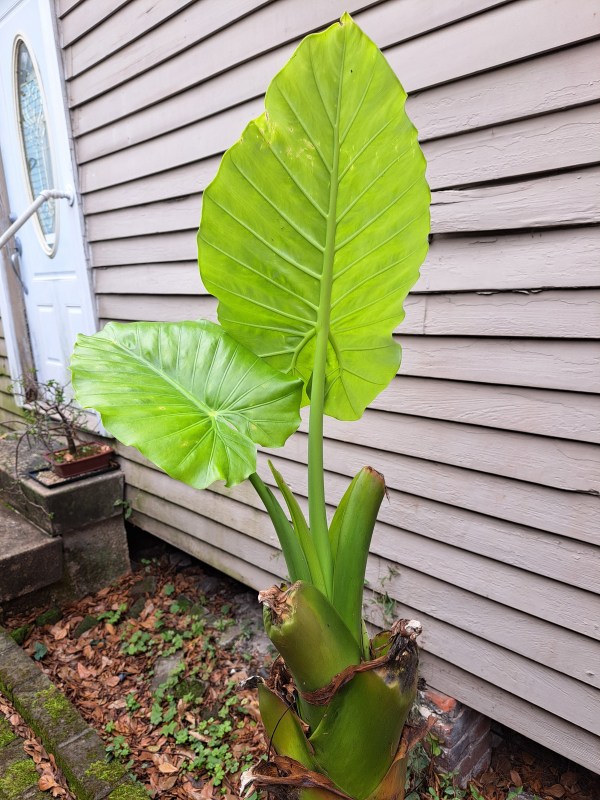
We had snow in January, and it decimated my elephant ear plant, Bert. I didn’t realize how bad it was until the top half of his stalk fell off.
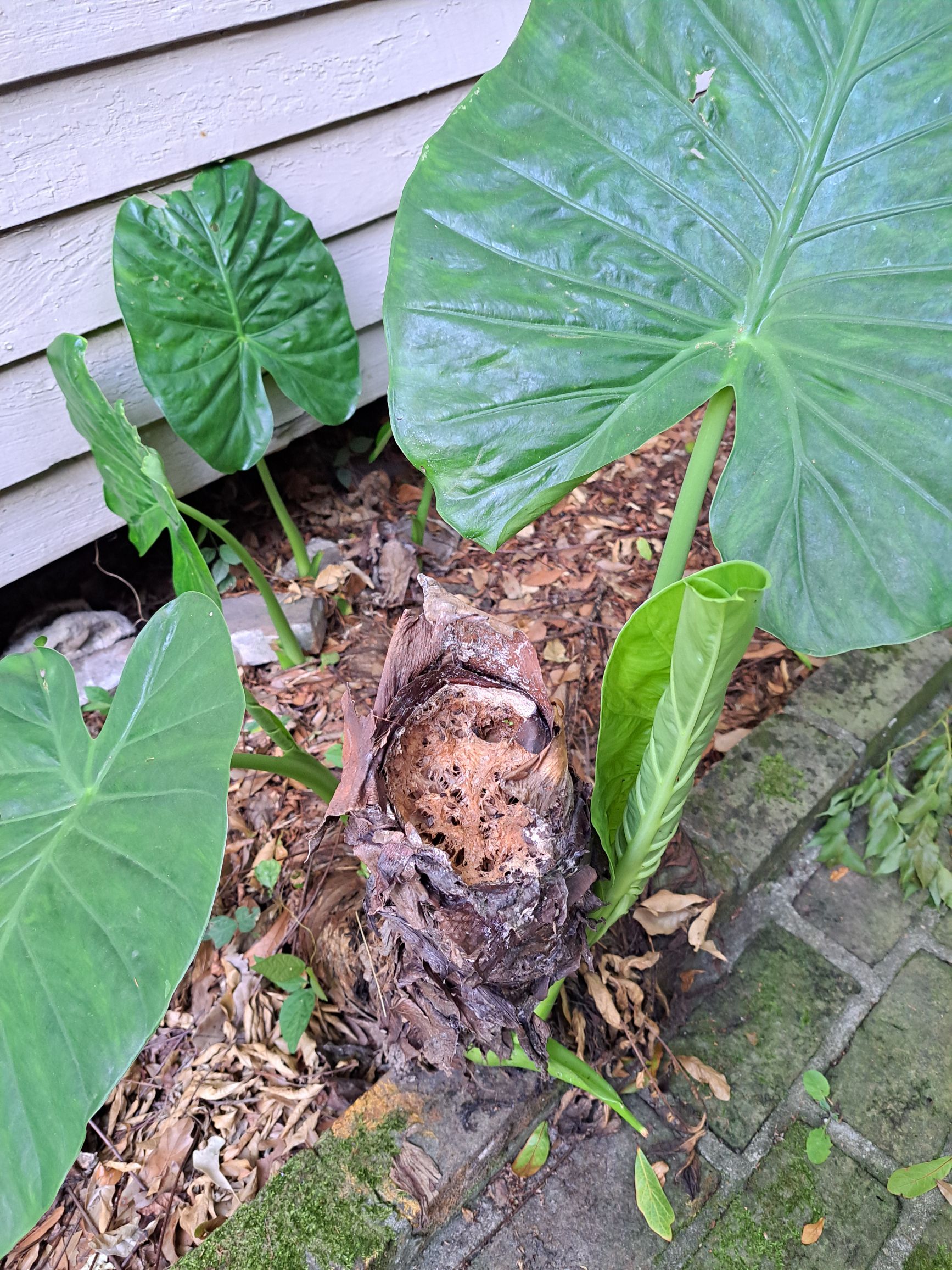
So I had to perform some gruesome but necessary plant surgery, and hack off that dead, rotten trunk so the new shoots can grow. ChatGPT told me to sprinkle cinnamon on the clean but still horrific wound as an antifungal, so I did that. It was smelly and slimy and I felt terrible. I learned from the book The Light Eaters by Zoe Schlanger that plants hate to be touched. But it was necessary. Bert doesn’t have to waste energy on that dying stalk now. Plants can survive even if they have to die back to the root.
Humanity at the Brink
I think that might be what human civilization has to do: die back to the root and start over.
I think history’s verdict will be that in the first half of the 21st century, humanity became so enamored of our technology and endless streaming entertainment that we lost touch with what was truly real. We are about to be forcibly reminded, as climate change batters civilization to rubble with a never-ending chain of fires, floods and super-storms. Nation-states will be unable to respond to cascading emergencies. The insurance industry will collapse, leaving citizens and capital alike unable to recover from disasters. Those fires and floods will bring famine, plagues and wars.
The Uneven Collapse to Come
Not everywhere will get knocked back to the Age of Steam. High-tech enclaves like Shenzen and Silicon Valley will remain, full of Ais and robots. But they will be walled from the outside world and still consume more than their share of resources. They won’t be popular.
It seems the only way, though. Die back to the root. Every structure of our society is so broken, so unjust and extractive, they may be impossible to fix. They may just have to die. They seem bent on it, the forces of global capital. Sucking every last drop of blood out of Mother Earth and her people as they go.
What Survival Might Require
Those roots we will die back to will be local – our own towns, our own people. Food, water: the integrity of our land and waters so that we may *eat and drink.* As nation-states collapse, states and then cities will be thrown back on their own resources. Food you can grow yourself of from the farms outside of town. Plant-based diets to ease the burden on the Earth. Localized power like solar cells and other renewables. Communities looking to their own needs instead of relying on fragile long-distance networks that can be broken by catastrophe at any time.
My novel The Pono Way takes place in the 2090s, about halfway between this world and that one. Nation-states are still hanging on, barely. But more and more people are leaning more on their own resources, like the sea-steadings.
The Potential for Regrowth
Once a plant dies or is pruned back, it can concentrate its energy on new growth and recovery. That is the effect of Dark Ages in human history – they clear away what is dead so something new can grow. Old structures, old religions, old ways of seeing the world. Humanity has made it through dark Ages before. Never with so much at stake, but it probably felt like it at the time. What could be worse than the Fall of Rome? Europe and the Mediterranean nursed that wound for a thousand years.
What I hope we gain is, not a learning, but a remembering: we are not above nature, we are in it and of it. Its flourishing is ours. From the microbes in our guts to the mycelial networks running through every foot of living soil under our feet, to the phytoplankton in the seas. All one, cells in the body of Our Mother. Capitalism and its growth mindset have brought us to the brink of ruin. I hope we realize, really internalize, believe that we’re all in this together. Stewardship, not profit becomes the highest value.
Creative Destruction
The lesson of the dieback is that new hope can come from the ruins. The collision of the Old and New Worlds was a different kind of Dark Age, brutal and tragic, literally an apocalypse. But 500 years later a nation of that New World sent men to the Moon. The historian Yuval Harari said that, even with all its horror, the “discovery” of the New World was the most important event in human history, because it showed all humanity that things we never imagined were possible. All wisdom was not contained in the mythic past. We could look forward, to a new horizon. A New World. That was an epochal change.
My hope is that we can make it past this new Dark Age, the bitter fruit of our foolhardiness, and civilization on the other side will be better and stronger than before. More grounded in the earth and the people around us, more wise, more just. Using science and technology to hallow the Earth instead of despoil it. Mother Earth is pruning us.
And yes, it may take 500 years. But the civilization that grows out of that dieback should be the one that can take us to the stars. Just like Bert will grow back as luxurious as before. This after all is why I write speculative fiction; to look at the future and see how we can change it for the better. Or what happens if we don’t.
 Atlantis Fallen