A Change of Pace and an Update

This blog has been really heavy lately. (As are the times.) So I thought I would lighten things up with a excerpt from the novel I’m writing, Majestic Seventeen. As you may guess, it’s about the UFO Phenomenon. Another one of my lifelong obsessions.

I had the basic kernel of the story years ago, when I first read the book Mirage Men by Mark Pilkington. The UFO lore was so rich and complex, led in so many dimensions, I was surprised it didn’t appear more in popular entertainment. It would be fun to write.

I missed the whole “Glowing Auras and Black Money” article furor originally. But when the three videos GIMBAL, GOFAST, and FLIR made worldwide news I clued back in, and realized now was the time for this story.

At this point in the story my main character, Carmen Acevedo, has already been nabbed by Majestic because he’s seen too much:


โ€œYou pendejos really are spying on us!โ€โ€จ

Quinn grunted with what seemed like amusement. โ€œWe spy on everyone. Most people are boring as shit.โ€โ€จ

Carmen saw no need to disbelieve him. โ€œWhat about Emilio?โ€

โ€จWhitmer fiddled with his phone, and an image came up of a terrified-looking cousin Emilio in an interrogation room. The timestamp said 12:04 AM. Three hours ago? Emilio was being badgered by three men in Air Force uniforms, but he quickly conceded and signed a paper, just like Carmen had. Then he was hustled out of the room.โ€จ

โ€œMr. Diaz got quite a scare, but he realizes now that your message was a matter of national security. Will he be quiet?โ€ Whitmer asked coyly.โ€จ

โ€œYes,โ€ Carmen said. Emilio was a stand-up guy. If asked to keep quiet by appealing to his patriotism, he would.โ€จ

โ€œThen letโ€™s go,โ€ Whitmer said, and exited the car. Quinn followed.

When Carmen got out of the car, he realized where they were. In the distance, lit by floodlights, was the famous Vehicle Assembly Building, looming huge and white. Closer and to the right, there was a rocket in a gantry, also lit by floodlights. The limo was parked on an ancient, cracked slab of concrete. The sound of the Atlantic surf came distantly from what must be the east.โ€จ

โ€œThis is Kennedy Space Center.โ€ Carmen had come here on a Boy Scout trip. Once seen, it wasnโ€™t forgotten. โ€œWhy are we here?โ€

With an annoying smirk, Quinn pointed upwards.

Carmen looked up.โ€จ

He saw nothing.โ€จ

Or did he?

There was something up thereโ€”some weight or mass in the air above them. Carmen realized he could no longer hear the surf, the insects. A weird silence had descended.

Then a deep, subsonic humming arose from the silence. The sense of weight, oppression increased. The hair stood up on his arms and neck.

โ€œWhatโ€”?โ€โ€จ

โ€œJust wait,โ€ Quinn said, grinning.

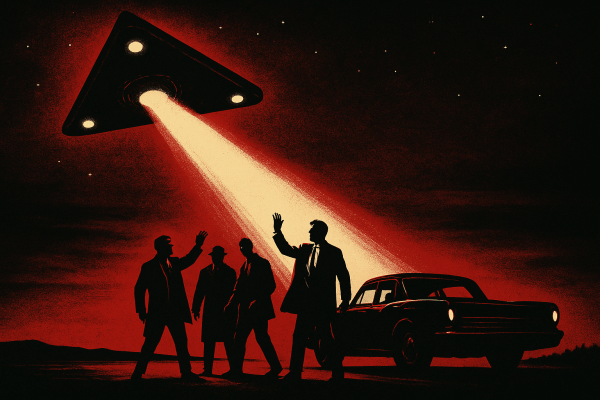
A column of red light suddenly pierced the darkness, shining down fromโ€”โ€จโ€”a ship, a craft, an aircraft? It was triangular, black, and hugeโ€”stupefyingly huge. Like a building flying. Stories tall, wide as a football field.โ€จIt descended over them, silent but for that humming noiseโ€”no engines, no wind from its descent. It fell eerily down from the sky, too quiet, too slow.

About thirty feet over their heads, it stopped. Its surface was matte black and featureless, except for a faint tracery of patternโ€”circuitry maybe. The red light had been replaced by three smaller white lights at the corners. A cylinder extended down from its underside; a door opened. A lift.

Carmen tried to speak, couldnโ€™t. Swallowed, tried again. โ€œWhere are we going?โ€

โ€จโ€œAlaska,โ€ Quinn said, and stepped in the lift.โ€จ

Whitmer gestured, after you, and Carmen steeled himself and entered as well.


Some doors you can never go back through.

I hope you like it! I’m all but done with the first draft.

The Pono Way is Horribly Relevant Once Again

I wrote my second novel, The Pono Way, during Donald Trumpโ€™s first administration.  Published it toward the end.  I was pleased to see that even those who didnโ€™t really enjoy the book, still got the message: be welcoming to immigrants.  They need help, not condemnation.

The book got some good reviews and was a semi-finalist in an indie sci-fi contest, so I was pleased with it overall.ย ย ย Iโ€™m glad the book arrived in time to be relevant, but I was relieved that its message, speaking out against MAGAโ€™s particular blind anti-immigrant furor, was no longer so necessary.ย ย 

But here it is again.ย ย FOTUS is back, and masked thugs are snatching people off the streets without warrants, badges, or accountability.ย ย Brown people.ย ย Foreign people.ย ย People going to their immigration meetings.ย ย And the occasional natural-born American citizen caught up in the sweeps.ย ย Oops.ย ย Trumpโ€™s brownshirts.ย ย Hard to believe.ย ย Hard to accept.ย ย 

So The Pono Way is relevant once again: follow the message of Leviticus toย welcome the stranger among you as your own, for you were once strangers in the land of Egypt.ย ย And the ethos of the United States:ย give me your tired, your poorโ€ฆ I lift my lamp beside the golden door.

This means a great deal to me.  My mother was an immigrant.  Iโ€™m a second-generation American.  I can feel it, the xenophobia.  Itโ€™s personal to me.  Itโ€™s not abstract.  I hate it!  America is built from the grit of generations of people like my mom, who took a powder on their whole entire lives, and went to live a new one in the New World.   And the people who survived being snatched from everything they’d ever known, the destruction of their ways of life. . To deny that is morally insidious.  

So, I kind of hate that the book is newly relevant again, but Iโ€™m also glad it outโ€™s there, doing its job, a tale to point people to.  It has a happy ending! I like to write positive sci-fi. 

Also itโ€™s short.  A short novel but I put a lot into it. Itโ€™s short, itโ€™s on Kindle Unlimited, and it has a happy ending.  We all could use one.  So check it out!  

Die Back at the Root

The Brutal Kindness of Pruning

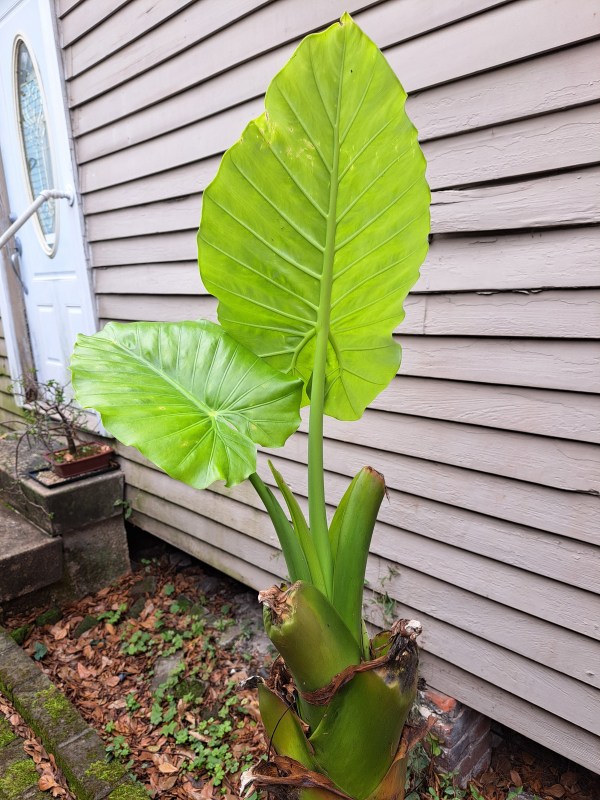
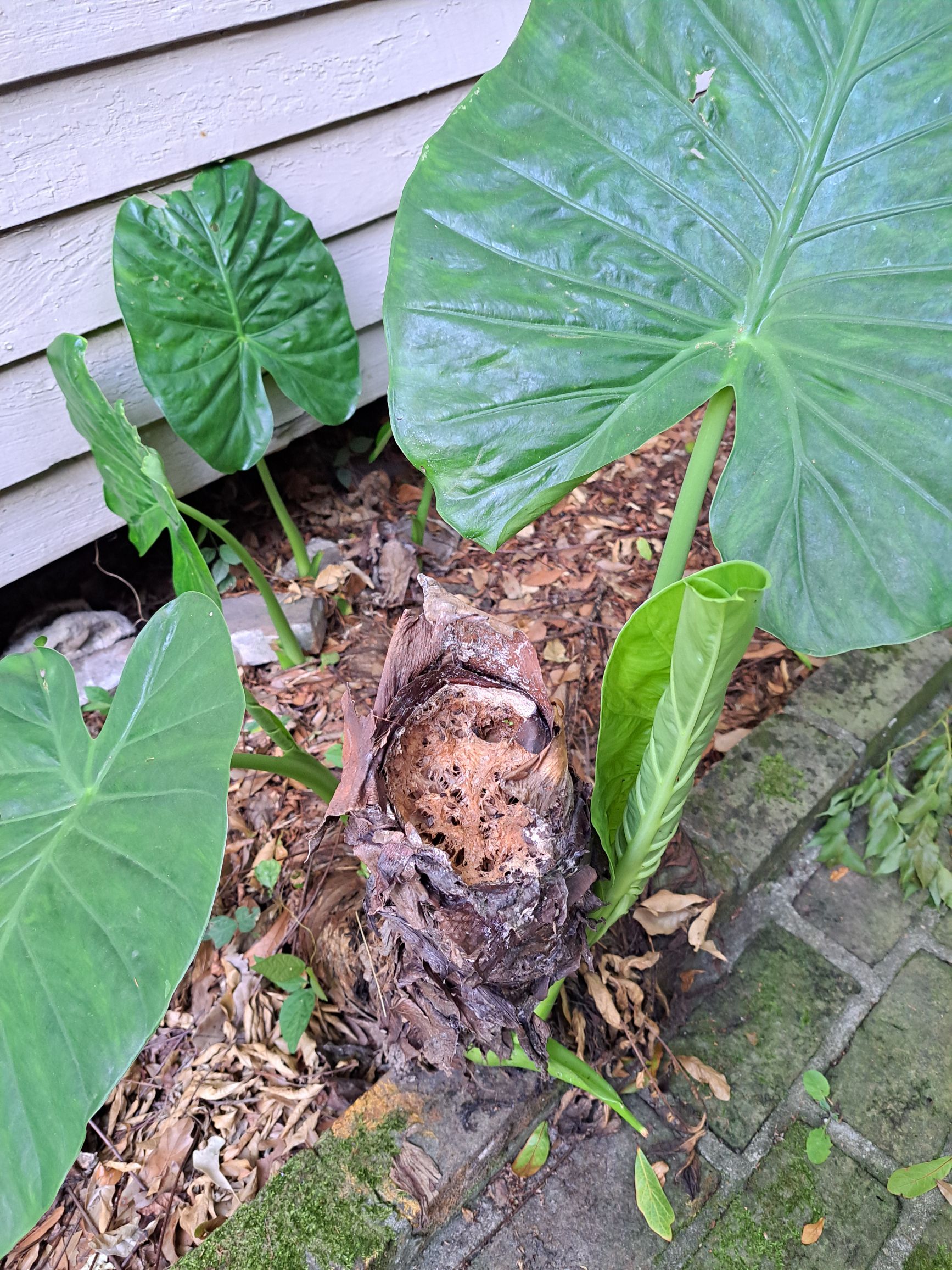
We had snow in January, and it decimated my elephant ear plant, Bert.  I didnโ€™t realize how bad it was until the top half of his stalk fell off. 

An elephant ear plant with an ugly, rotten trunk

So I had to perform some gruesome but necessary plant surgery, and hack off that dead, rotten trunk so the new shoots can grow.  ChatGPT told me to sprinkle cinnamon on the clean but still horrific wound as an antifungal, so I did that.  It was smelly and slimy and I felt terrible.  I learned from the book The Light  Eaters by Zoe Schlanger that plants hate to be touched.  But it was necessary.  Bert doesnโ€™t have to waste energy on that dying stalk now.  Plants can survive even if they have to die back to the root.

 Humanity at the Brink

I think that might be what human civilization has to do: die back to the root and start over.  

I think historyโ€™s verdict will be that in the first half of the 21st century, humanity became so enamored of our technology and endless streaming entertainment that we lost touch with what was truly real.  We are about to be forcibly reminded, as climate change batters civilization to rubble with a never-ending chain of fires, floods and super-storms.  Nation-states will be unable to respond to cascading emergencies.  The insurance industry will collapse, leaving citizens and capital alike unable to recover from disasters.  Those fires and floods will bring famine, plagues and wars. 

 The Uneven Collapse to Come

Not everywhere will get knocked back to the Age of Steam.  High-tech enclaves like Shenzen and Silicon Valley will remain, full of Ais and robots.  But they will be walled from the outside world and still consume more than their share of resources.  They wonโ€™t be popular.  

It seems the only way, though.  Die back to the root.  Every structure of our society is so broken, so unjust and extractive, they may be impossible to fix.  They may just have to die.  They seem bent on it, the forces of global capital.  Sucking every last drop of blood out of Mother Earth and her people as they go.

 What Survival Might Require

Those roots we will die back to will be local โ€“ our own towns, our own people.  Food, water: the integrity of our land and waters so that we may *eat and drink.* As nation-states collapse, states and then cities will be thrown back on their own resources.   Food you can grow yourself of from the farms outside of town.  Plant-based diets to ease the burden on the Earth.  Localized power like solar cells and other renewables.  Communities looking to their own needs instead of relying on fragile long-distance networks that can be broken by catastrophe at any time.

My novel The Pono Way takes place in the 2090s, about halfway between this world and that one.  Nation-states are still hanging on, barely.  But more and more people are leaning more on their own resources, like the sea-steadings.

The Potential for Regrowth

Once a plant dies or is pruned back, it can concentrate its energy on new growth and recovery.  That is the effect of Dark Ages in human history โ€“ they clear away what is dead so something new can grow.  Old structures, old religions, old ways of seeing the world.   Humanity has made it through dark Ages before.  Never with so much at stake, but it probably felt like it at the time.  What could be worse than the Fall of Rome?  Europe and the Mediterranean nursed that wound for a thousand years.

What I hope we gain is, not a learning, but a remembering: we are not above nature, we are in it and of it.  Its flourishing is ours.  From the microbes in our guts to the mycelial networks running through every foot of living soil under our feet, to the phytoplankton in the seas.  All one, cells in the body of Our Mother.  Capitalism and its growth mindset have brought us to the brink of ruin.  I hope we realize, really internalize, believe that weโ€™re all in this together.  Stewardship, not profit becomes the highest value. 

Creative Destruction

The lesson of the dieback is that new hope can come from the ruins.  The collision of the Old and New Worlds was a different kind of Dark Age, brutal and tragic, literally an apocalypse.  But 500 years later a nation of that New World sent men to the Moon.  The historian Yuval Harari said that, even with all its horror, the โ€œdiscoveryโ€ of the New World was the most important event in human history, because it showed all humanity that things we never imagined were possible.  All wisdom was not contained in the mythic past.  We could look forward, to a new horizon.  A New World. That was an epochal change.  

My hope is that we can make it past this new Dark Age, the bitter fruit of our foolhardiness, and civilization on the other side will be better and stronger than before.  More grounded in the earth and the people around us, more wise, more just.  Using science and technology to hallow the Earth instead of despoil it.  Mother Earth is pruning us. 

And yes, it may take 500 years. But the civilization that grows out of that dieback should be the one that can take us to the stars. Just like Bert will grow back as luxurious as before.  This after all is why I write speculative fiction; to look at the future and see how we can change it for the better.  Or what happens if we donโ€™t. 

Blog at WordPress.com.

Up ↑